We have a situation at work where developers working on a legacy (core) system are being pressured into using GOTO statements when adding new features into existing code that is already infected with spaghetti code.
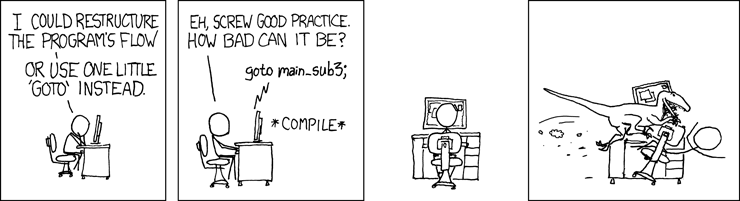
Now, I understand there may be arguments for using 'just one little GOTO' instead of spending the time on refactoring to a more maintainable solution. The issue is, this isolated 'just one little GOTO' isn't so isolated. At least once every week or so there is a new 'one little GOTO' to add. This codebase is already a horror to work with due to code dating back to or before 1984 being riddled with GOTOs that would make many Pastafarians believe it was inspired by the Flying Spaghetti Monster itself.
Unfortunately the language this is written in doesn't have any ready made refactoring tools, so it makes it harder to push the 'Refactor to increase productivity later' because short-term wins are the only wins paid attention to here...
Has anyone else experienced this issue whereby everybody agrees that we cannot be adding new GOTOs to jump 2000 lines to a random section, but continually have Anaylsts insist on doing it just this one time and having management approve it?
tldr;
How can one go about addressing the issue of developers being pressured (forced) to continually add GOTO statements (by add, I mean add to jump to random sections many lines away) because it 'gets that feature in quicker'?
I'm beginning to fear we may lose valuable developers to the raptors over this...
Clarification:
Goto here
alsoThere: No, I'm talking about the kind of goto that jumps 1000 lines out of one subroutine into another one mid way into a while loop. Goto somew