How to Ride a Horse in the Winter
Pick a trail or pasture that doesn't have ice, mud, and other hazards.. Apply de-icing agents like salt or sawdust to icy or slippery areas.. Avoid areas that may have holes, roots, or branches hidden by snow.
Steps
Pick a trail or pasture that doesn't have ice, mud, and other hazards.
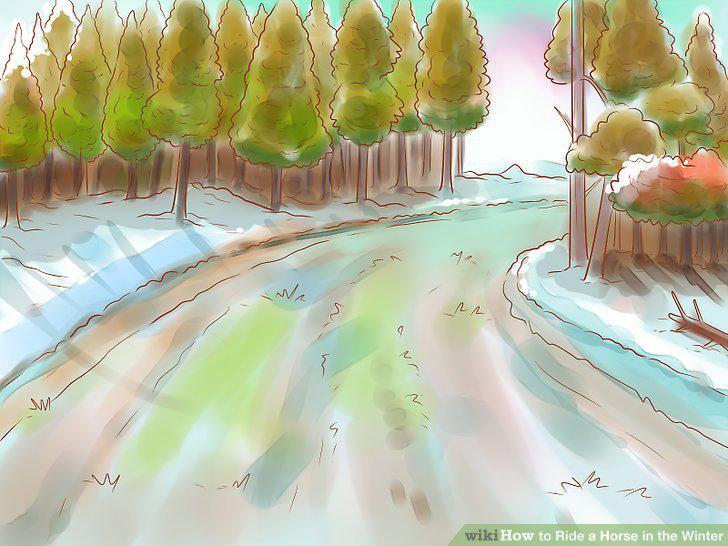
Pick a trail or pasture that doesn't have ice, mud, and other hazards.
Apply de-icing agents like salt or sawdust to icy or slippery areas.
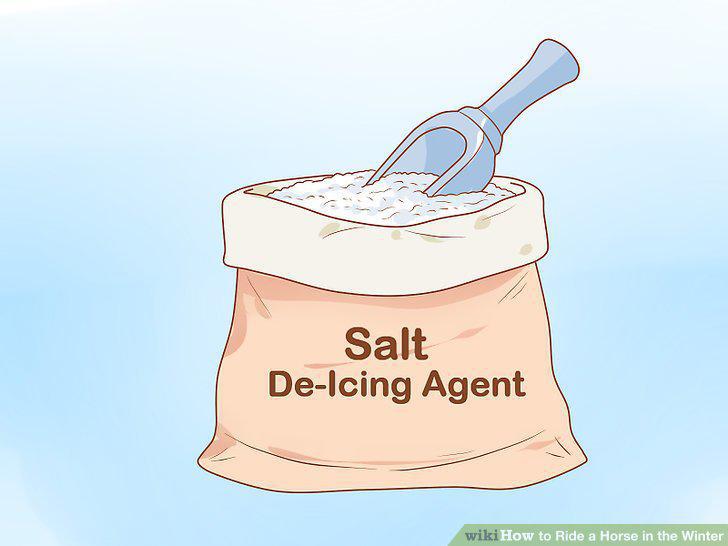
Apply de-icing agents like salt or sawdust to icy or slippery areas.
Avoid areas that may have holes, roots, or branches hidden by snow.
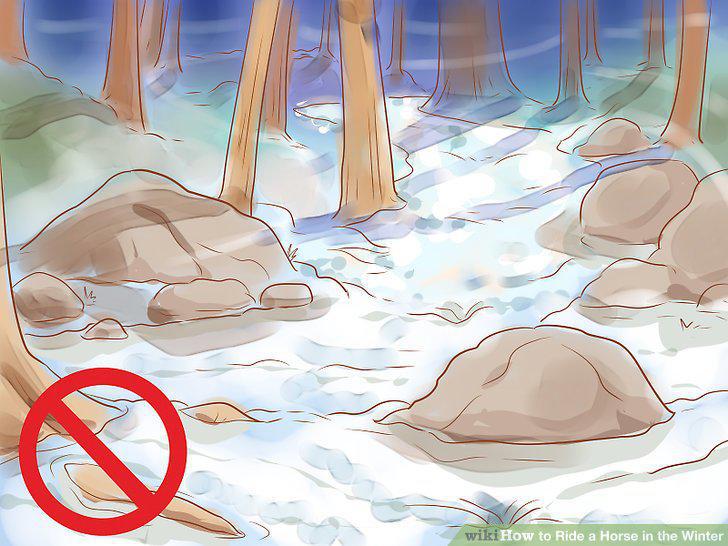
Avoid areas that may have holes, roots, or branches hidden by snow.
Choose flat trails during icy and wet conditions.
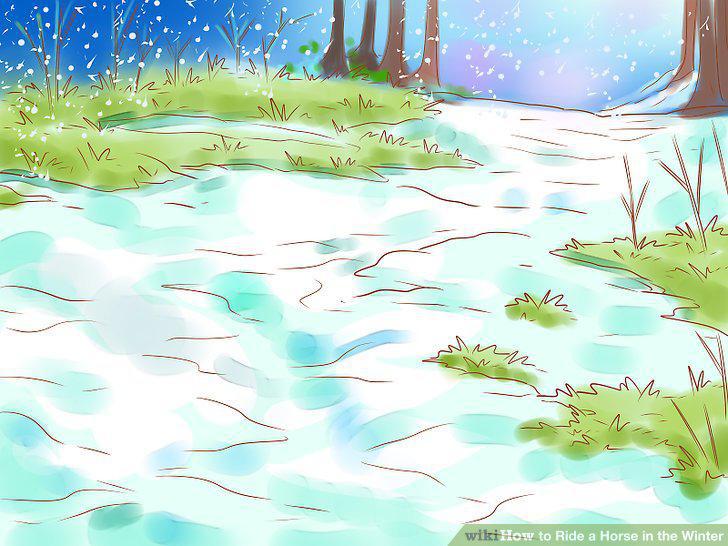
Choose flat trails during icy and wet conditions.
Avoid areas with deep mud.
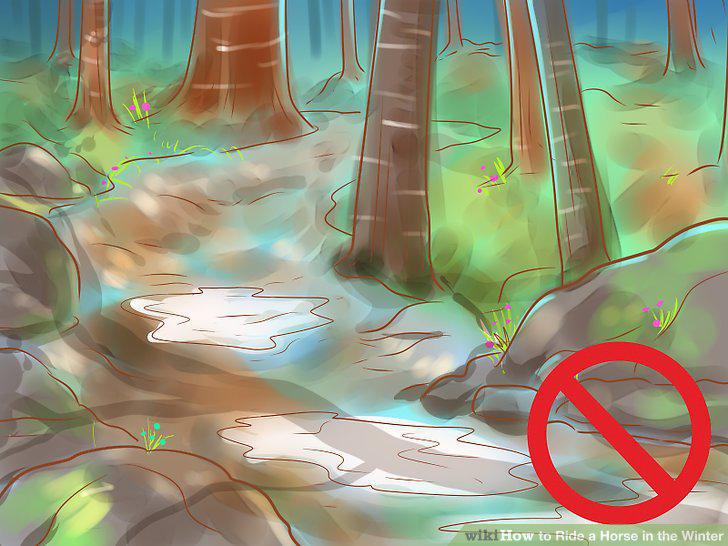
Avoid areas with deep mud.
Ride in an arena if you have trouble finding safe trails.
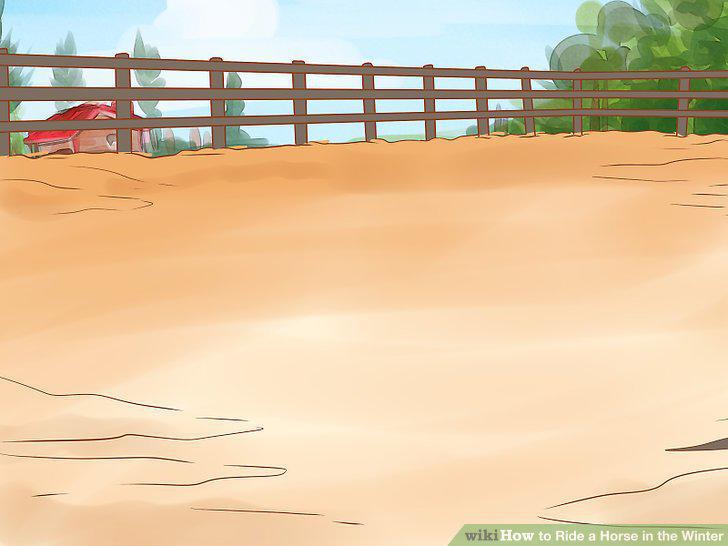
Ride in an arena if you have trouble finding safe trails.
Warm up your horse's bit before you tack up for your ride.
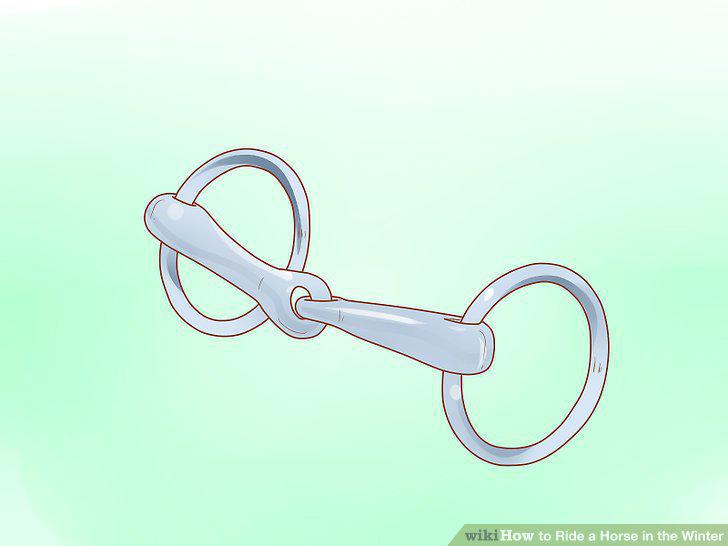
Warm up your horse's bit before you tack up for your ride.
Cover your horse's back with a waterproof wool or fleece quarter sheet.
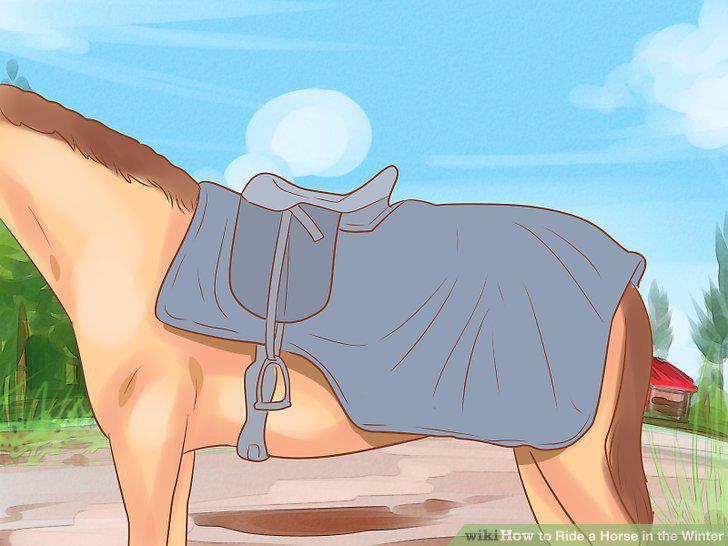
Cover your horse's back with a waterproof wool or fleece quarter sheet.
Put on hoof boots to protect the hooves from the icy ground, if you have them.
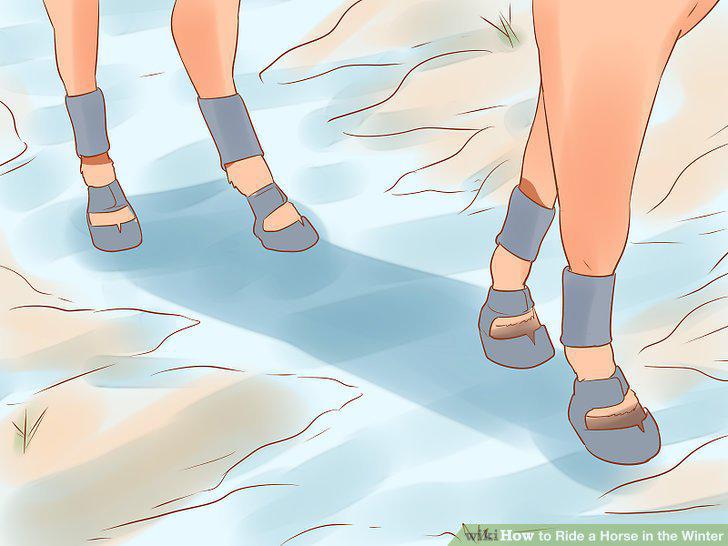
Put on hoof boots to protect the hooves from the icy ground, if you have them.
Allow your horse to warm up slowly.
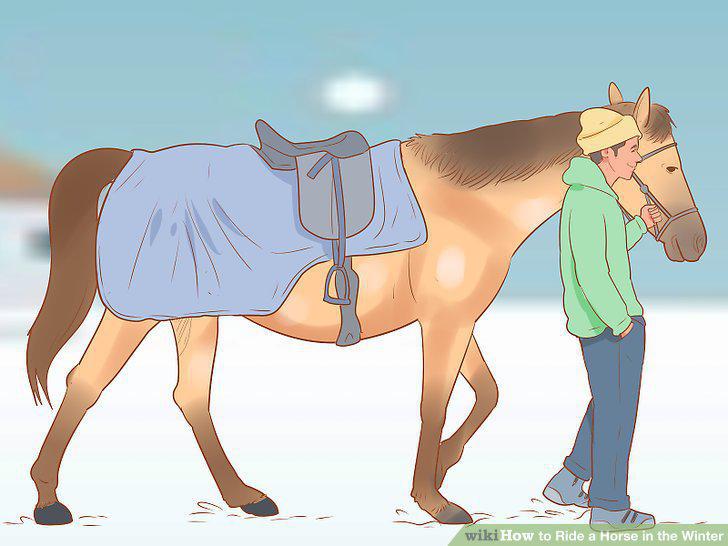
Allow your horse to warm up slowly.
Shorten the length of your rides, since your horse is working harder.
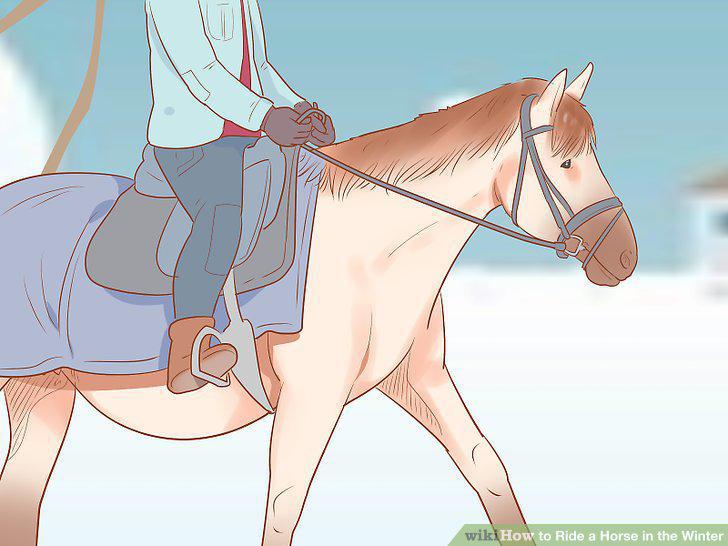
Shorten the length of your rides, since your horse is working harder.
Avoid brushing against snow-covered vegetation, which may cause chill.
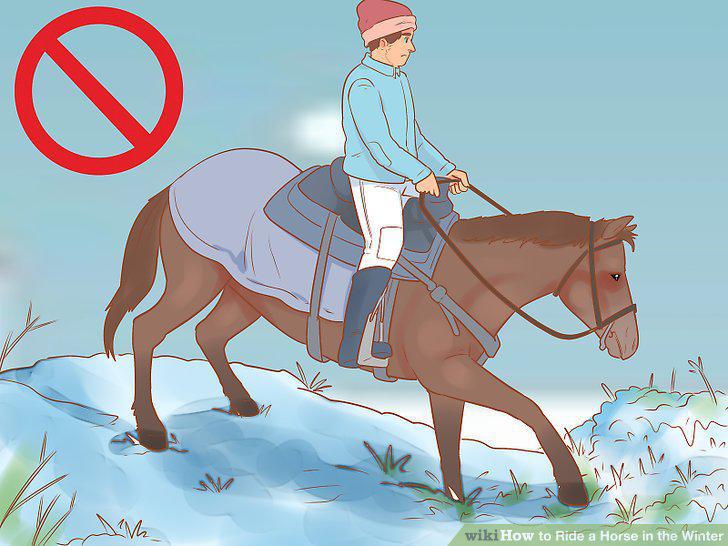
Avoid brushing against snow-covered vegetation, which may cause chill.
Go slowly so your horse sweats less, which limits the risk of chill.
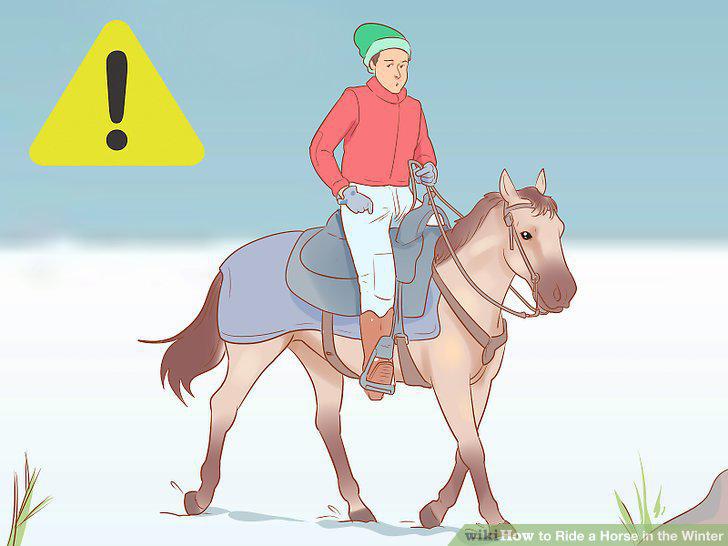
Go slowly so your horse sweats less, which limits the risk of chill.
Watch your horse for tiredness, as walking in winter requires more effort.
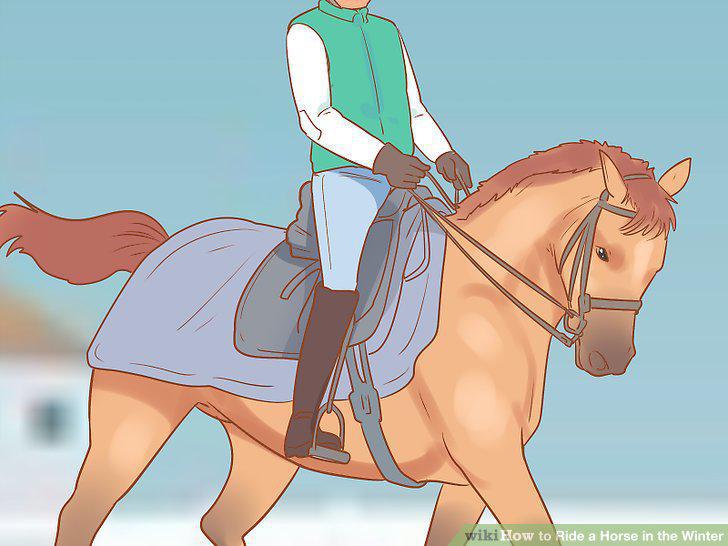
Watch your horse for tiredness, as walking in winter requires more effort.
Cool down your horse for 10-15 minutes after your ride.
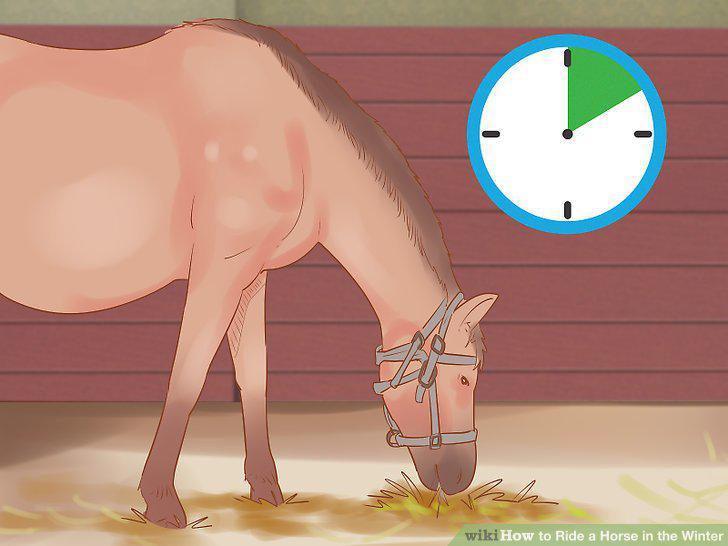
Cool down your horse for 10-15 minutes after your ride.
Use a hoof pick to remove ice and mud from the hooves, if necessary.
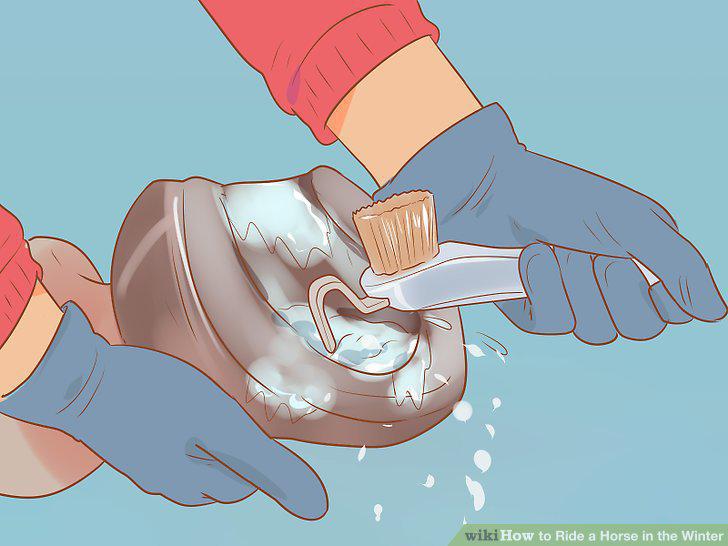
Use a hoof pick to remove ice and mud from the hooves, if necessary.
Brush your horse to remove ice, dirt, and mud from the coat.
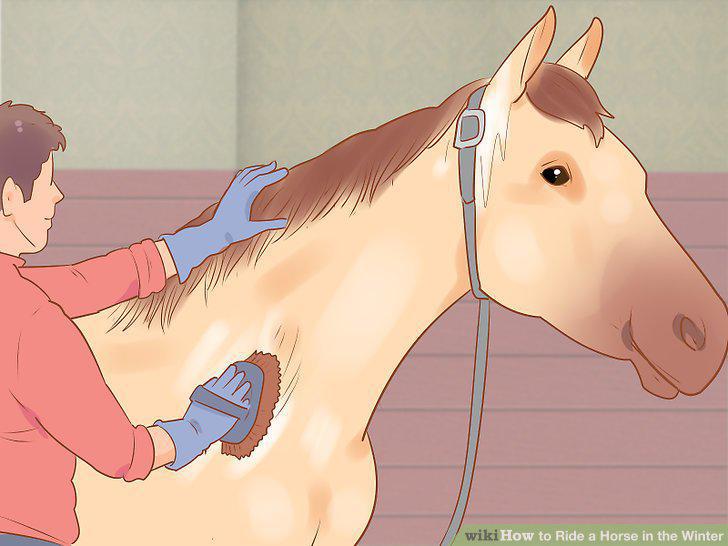
Brush your horse to remove ice, dirt, and mud from the coat.
Give your horse water heated to 50 °F (10 °C) to replenish lost fluids.
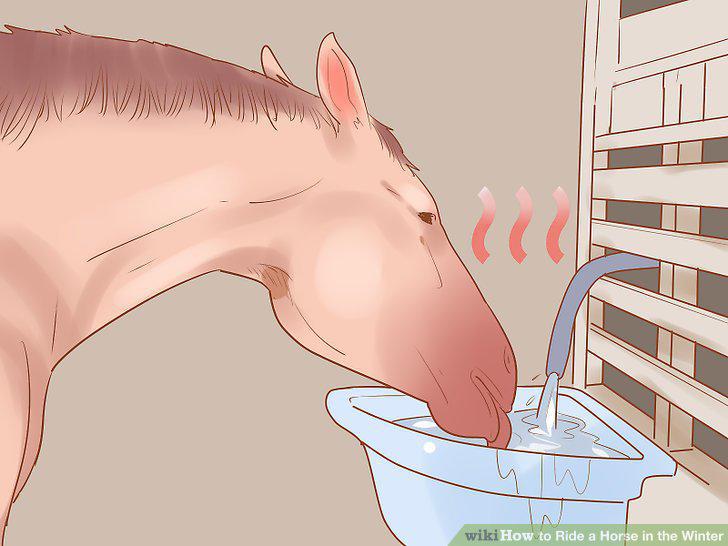
Give your horse water heated to 50 °F (10 °C) to replenish lost fluids.
Provide your horse with fresh hay to meet its higher energy needs.
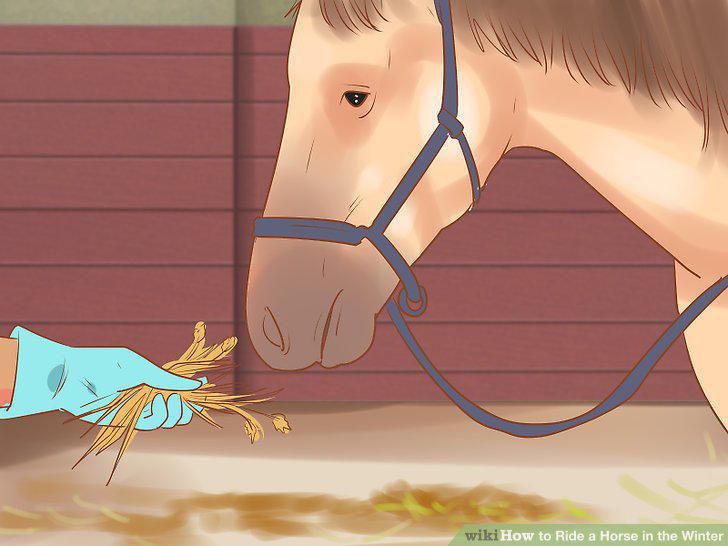
Provide your horse with fresh hay to meet its higher energy needs.
Comments (0)
No comments yet. Be the first to share your thoughts!