How to Calculate Electronegativity
Understand that chemical bonds occur when atoms share electrons.. Understand how electronegativity affects the electrons in the bond.. Use an electronegativity table as a reference.
Steps
Understand that chemical bonds occur when atoms share electrons.
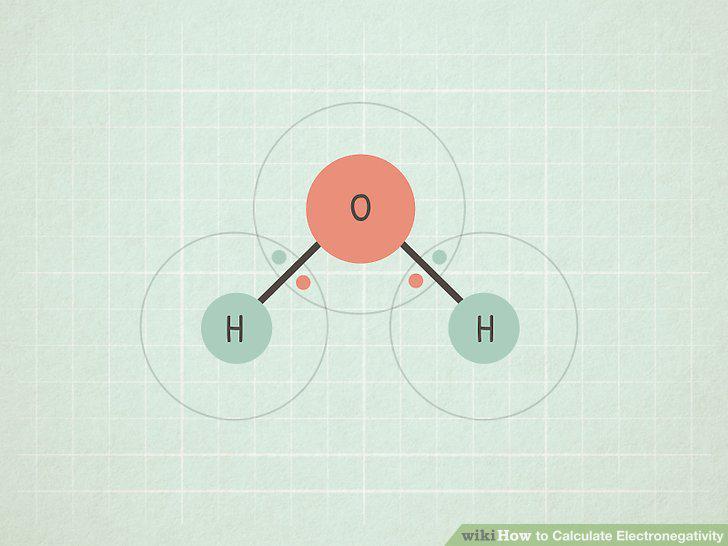
Understand that chemical bonds occur when atoms share electrons.
Understand how electronegativity affects the electrons in the bond.
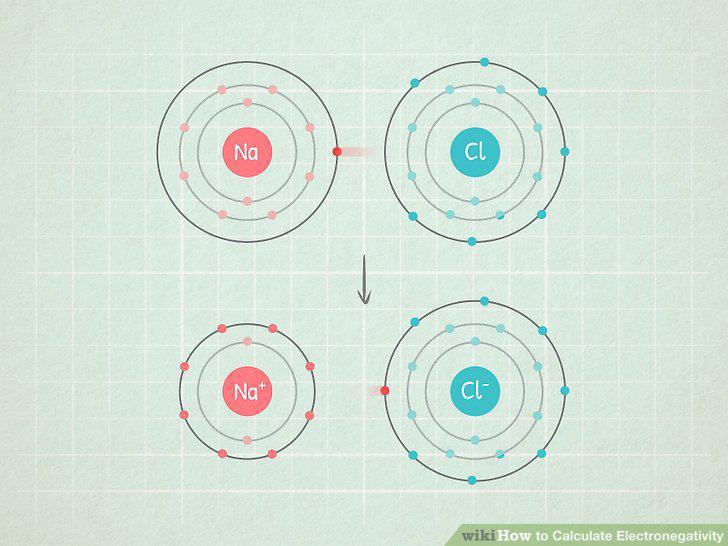
Understand how electronegativity affects the electrons in the bond.
Use an electronegativity table as a reference.
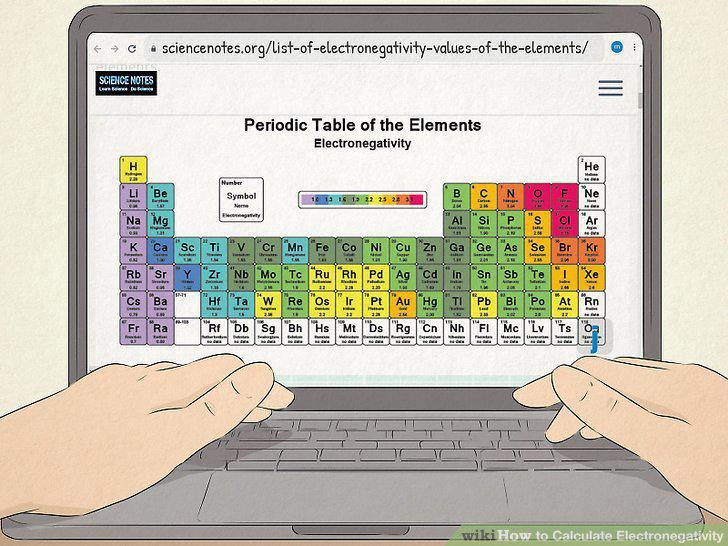
Use an electronegativity table as a reference.
Remember electronegativity trends for easy estimations.
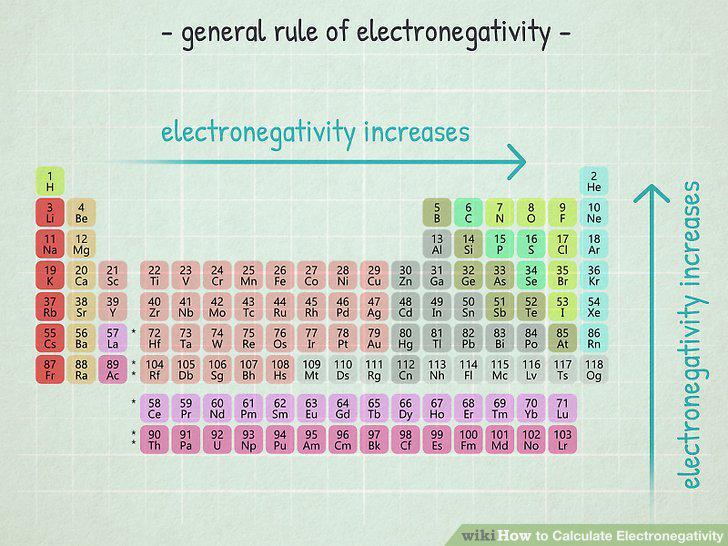
Remember electronegativity trends for easy estimations.
Find the electronegativity difference between the two atoms.
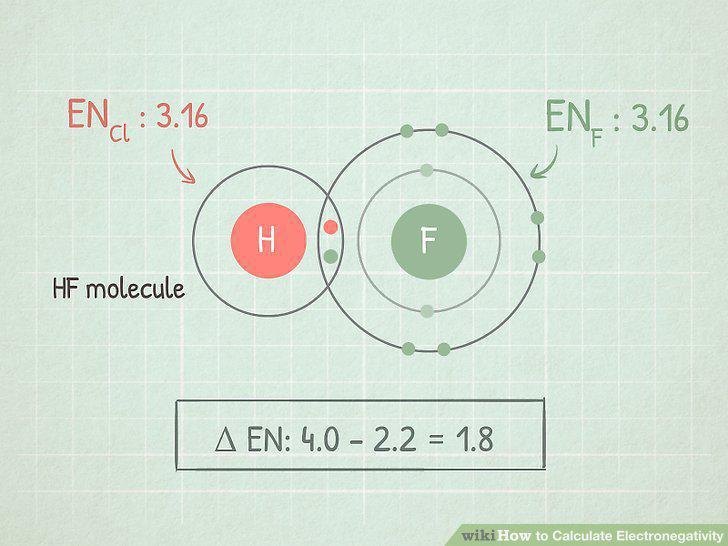
Find the electronegativity difference between the two atoms.
If the difference is below about 0.5, the bond is nonpolar covalent.
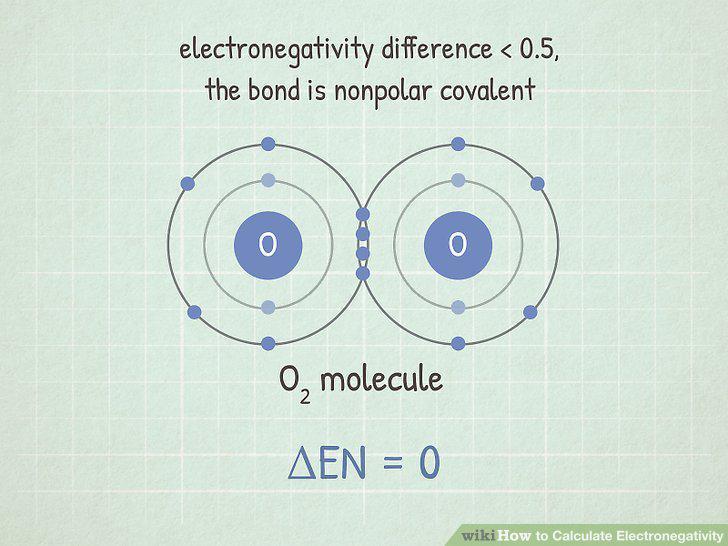
If the difference is below about 0.5, the bond is nonpolar covalent.
If the difference is between 0.5-1.6, the bond is polar covalent.
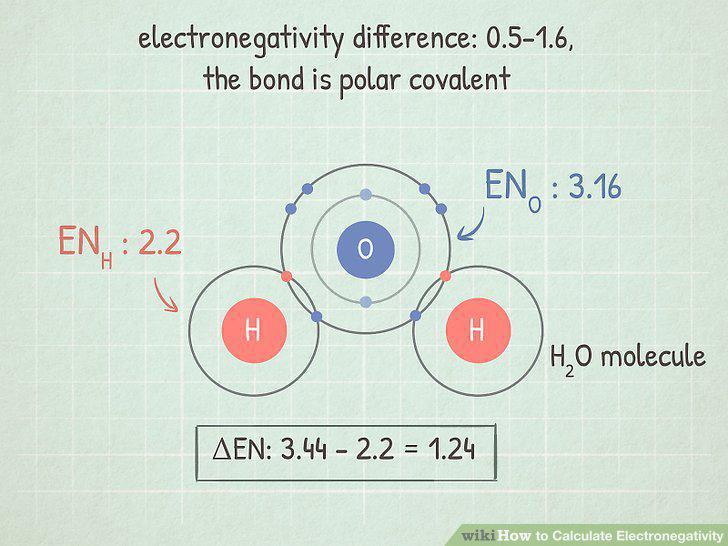
If the difference is between 0.5-1.6, the bond is polar covalent.
If the difference is over 2.0, the bond is ionic.
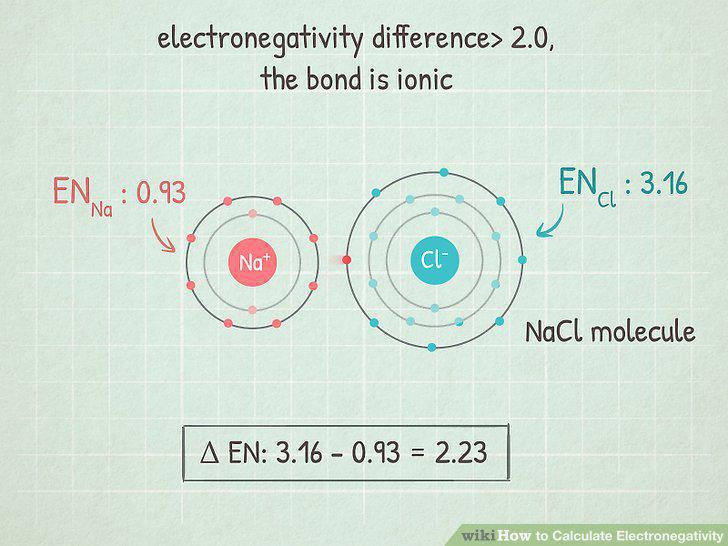
If the difference is over 2.0, the bond is ionic.
If the difference is between 1.6-2.0, check for a metal.
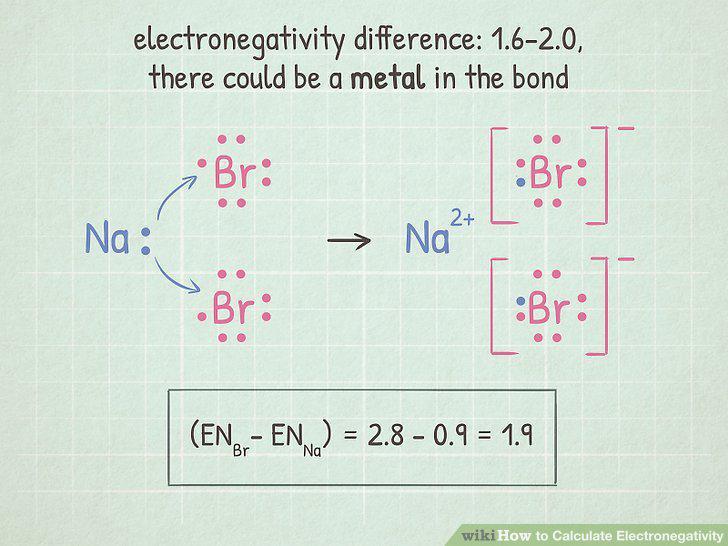
If the difference is between 1.6-2.0, check for a metal.
Find the first ionization energy of your atom.
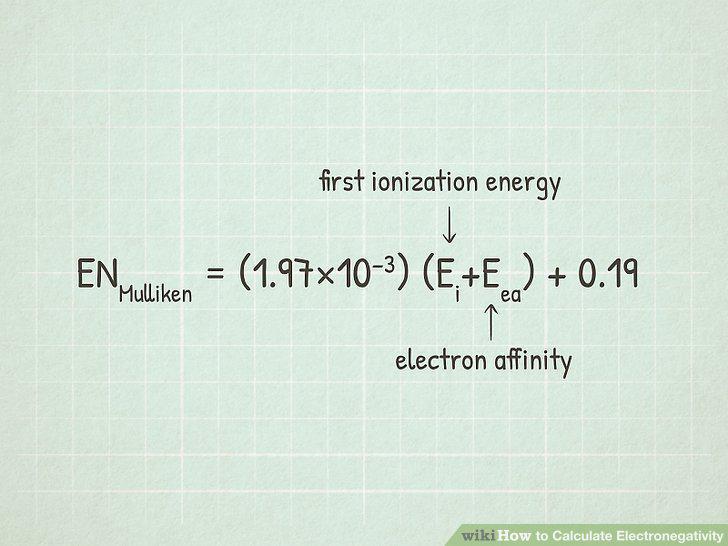
Find the first ionization energy of your atom.
Find the electron affinity of the atom.
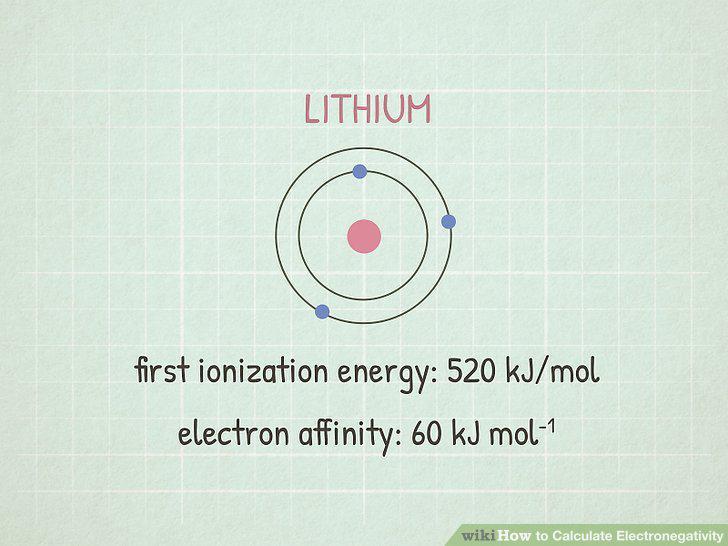
Find the electron affinity of the atom.
Solve the Mulliken electronegativity equation.
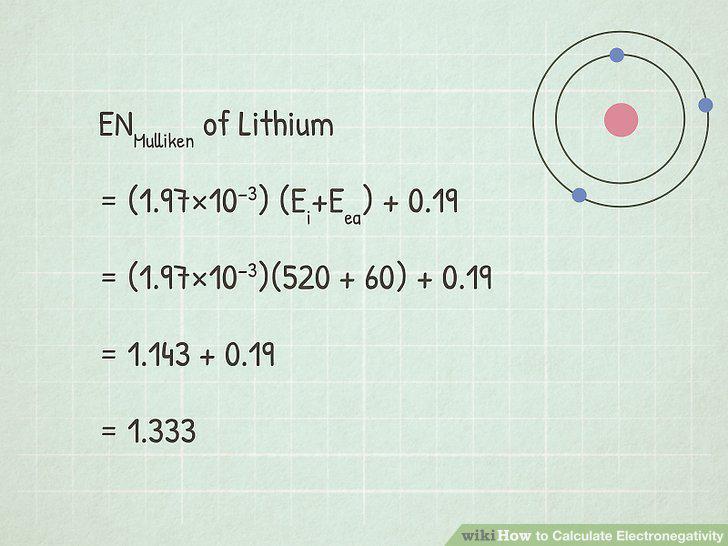
Solve the Mulliken electronegativity equation.
Comments (0)
No comments yet. Be the first to share your thoughts!