How to Measure Thermal Conductivity
Place the sample in between 2 plates of metal.. Heat the top plate and cool the bottom plate until the temperatures are steady.. Monitor the amount of heat passing through the sample.
Steps
Place the sample in between 2 plates of metal.
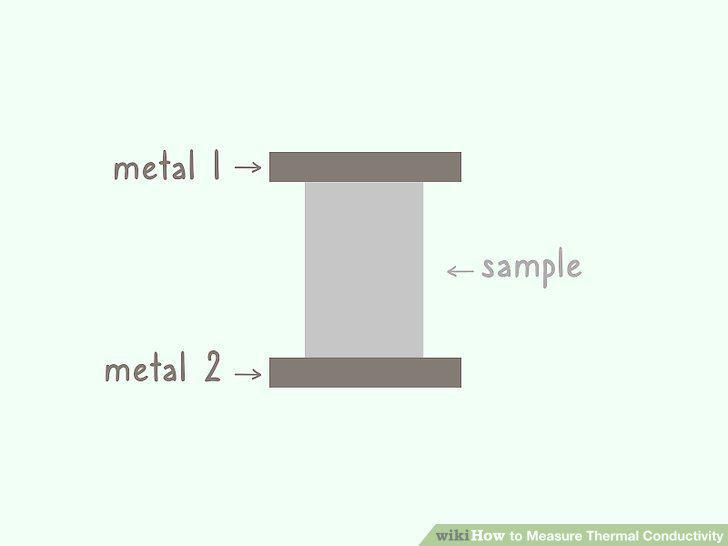
Place the sample in between 2 plates of metal.
Heat the top plate and cool the bottom plate until the temperatures are steady.
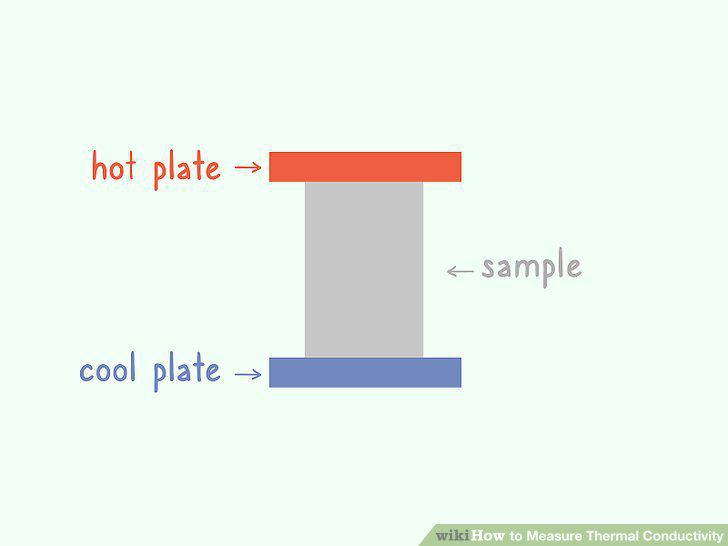
Heat the top plate and cool the bottom plate until the temperatures are steady.
Monitor the amount of heat passing through the sample.
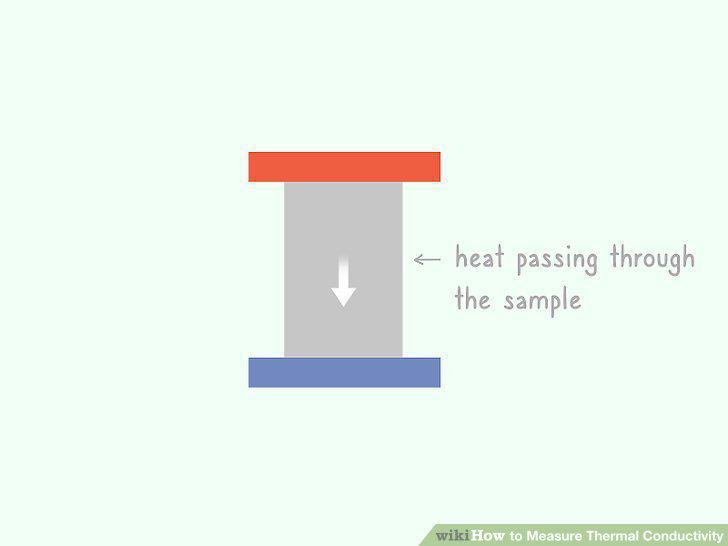
Monitor the amount of heat passing through the sample.
Apply Searle's bar method for a steady-state sample in tube form.
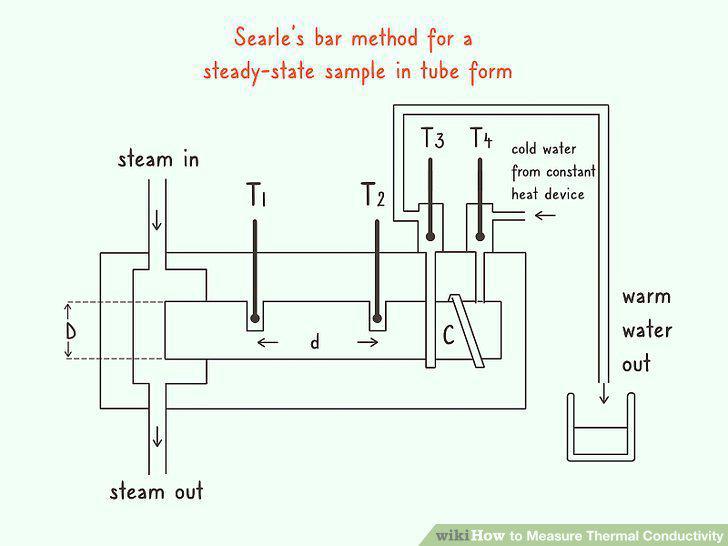
Apply Searle's bar method for a steady-state sample in tube form.
Test a small, thin sample with a parallel thermal conductance.
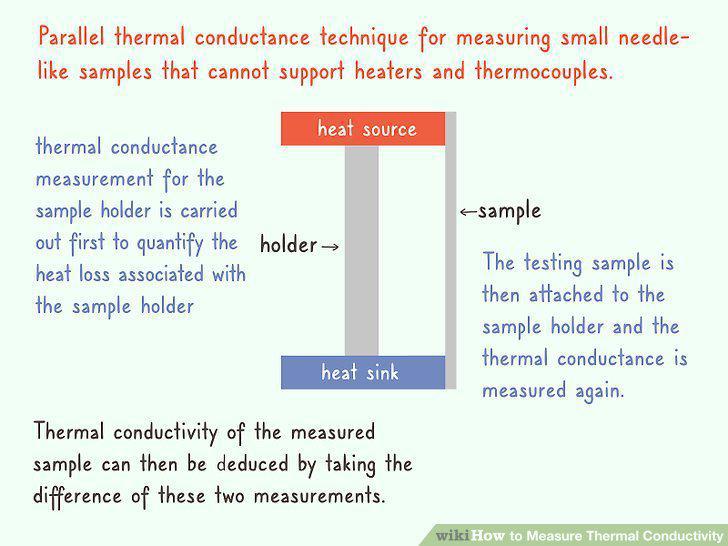
Test a small, thin sample with a parallel thermal conductance.
Insert a hot wire into the middle of your sample.
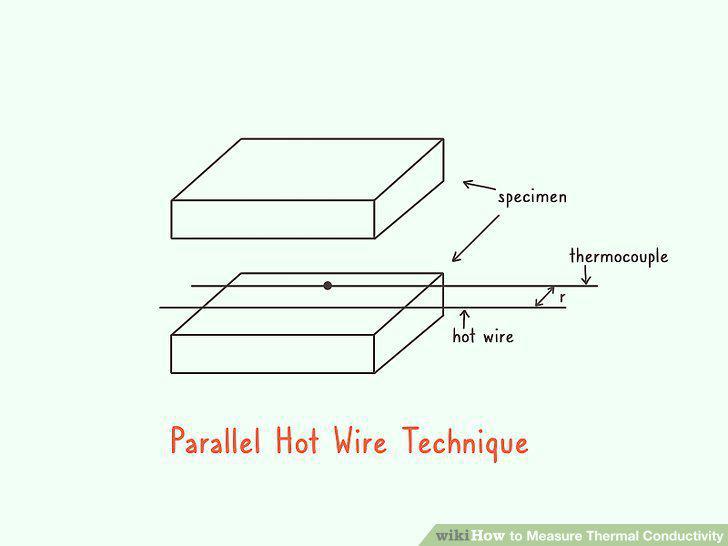
Insert a hot wire into the middle of your sample.
Monitor the temperature change in the wire over time.
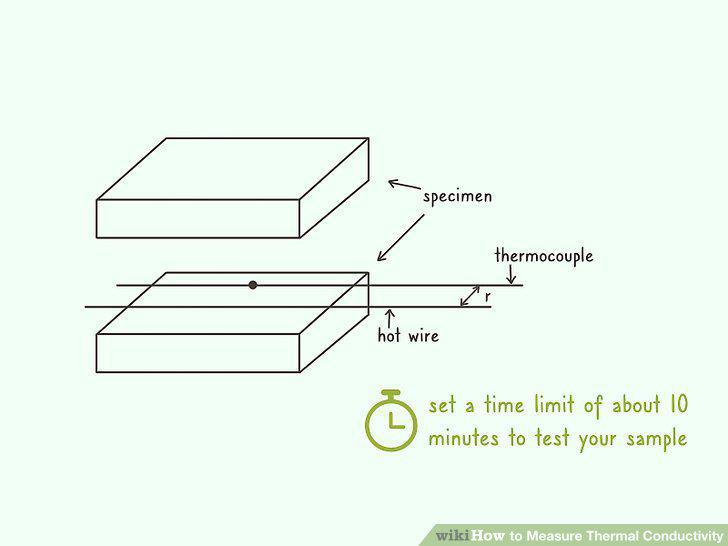
Monitor the temperature change in the wire over time.
Plot the temperature change on a graph.
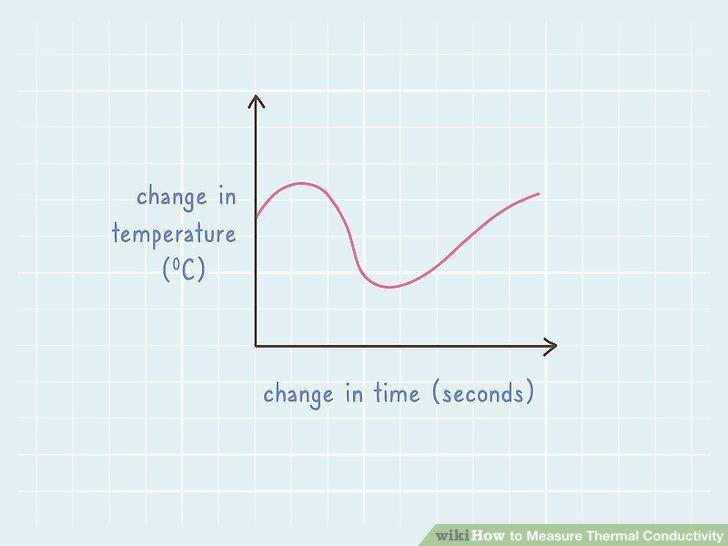
Plot the temperature change on a graph.
Monitor a laser flash for a quick way to test nonsteady-states.
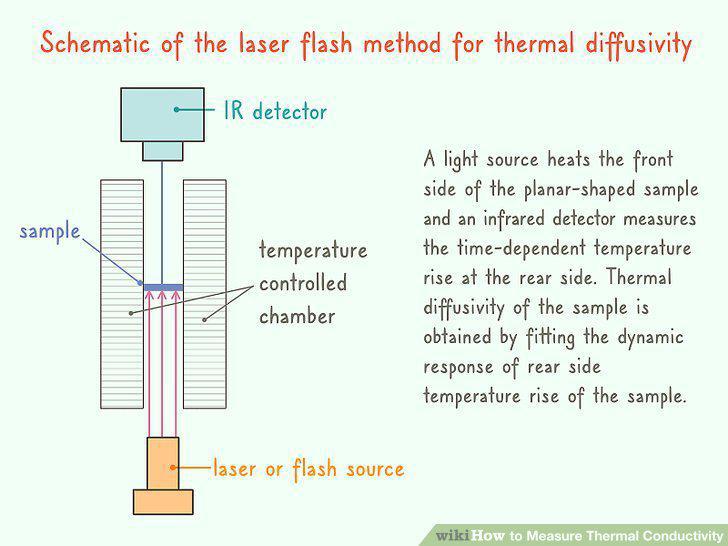
Monitor a laser flash for a quick way to test nonsteady-states.
Measure thermal conductivity and thermal power with pulsed power.
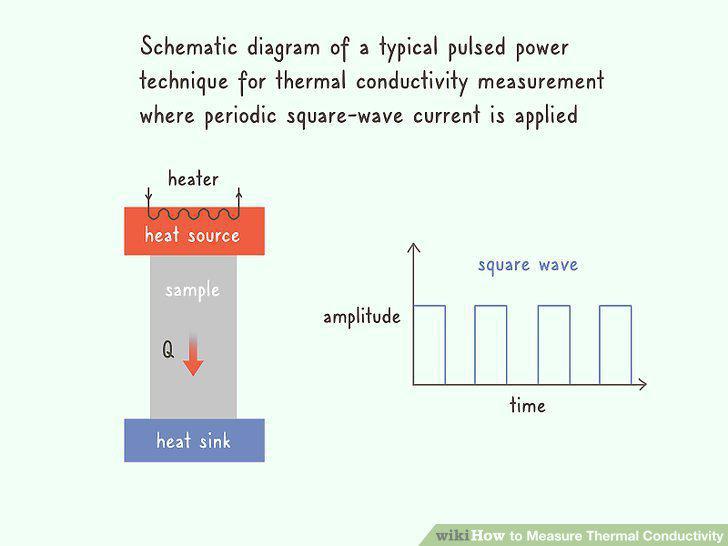
Measure thermal conductivity and thermal power with pulsed power.
Write down the equation for thermal conductivity:
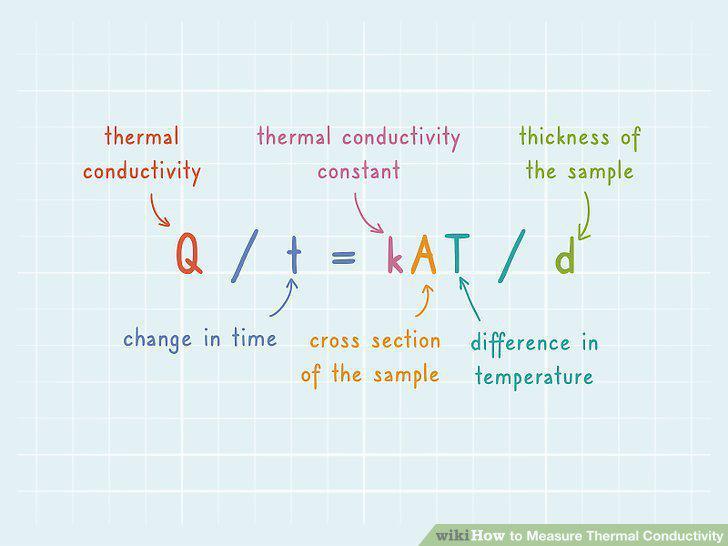
Write down the equation for thermal conductivity:
Multiply both sides of the equation by "t.
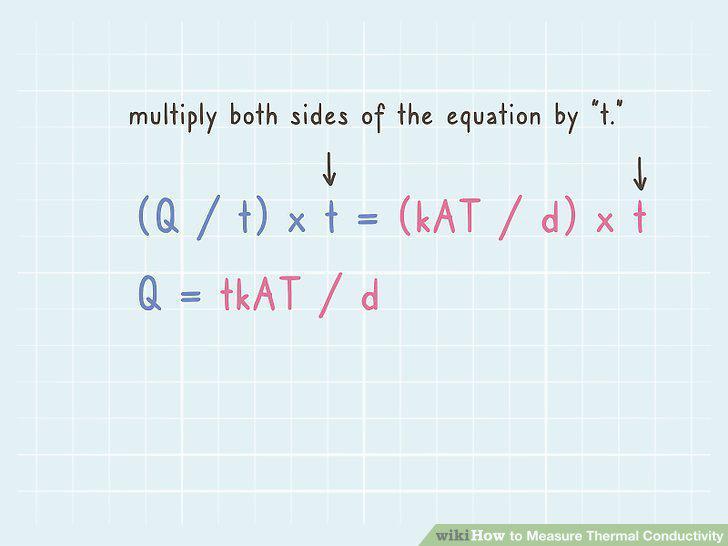
Multiply both sides of the equation by "t.
Convert your time into seconds and plug it into the equation.
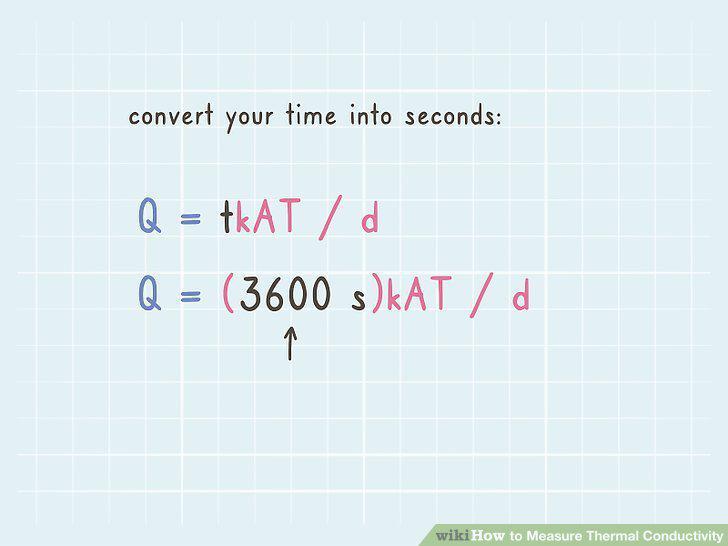
Convert your time into seconds and plug it into the equation.
Plug in your thermal conduction constant for "k.
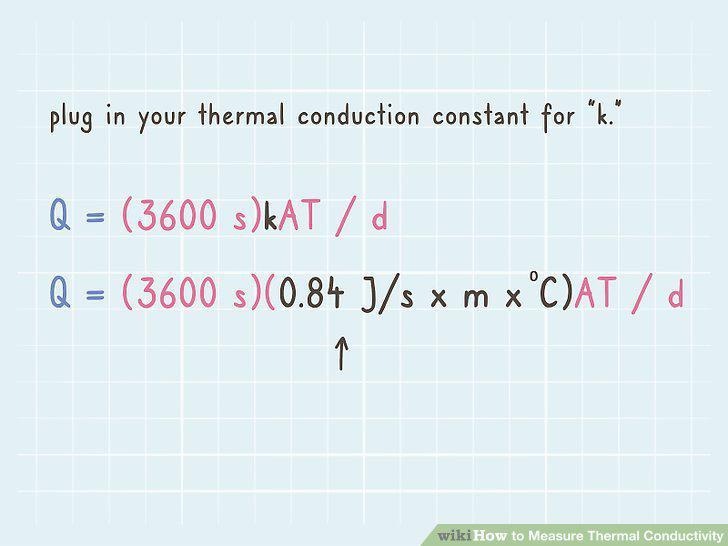
Plug in your thermal conduction constant for "k.
Multiply height x width of your sample and plug it into the "A.
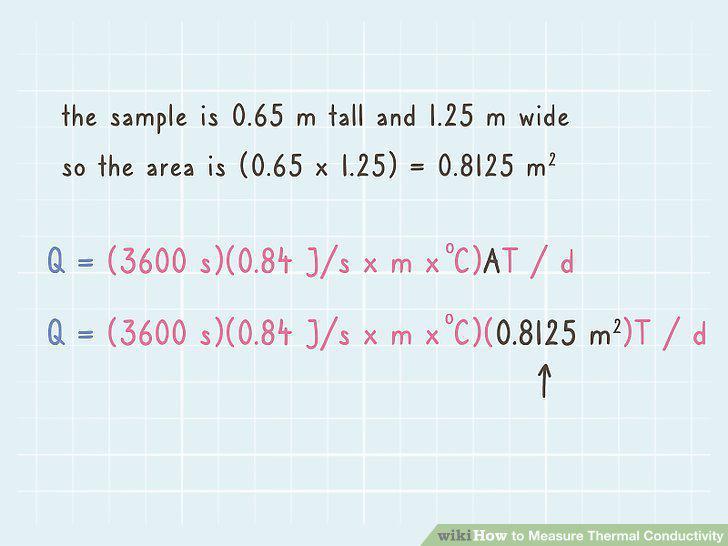
Multiply height x width of your sample and plug it into the "A.
Subtract the cold from the hot temperature and use it for "T.
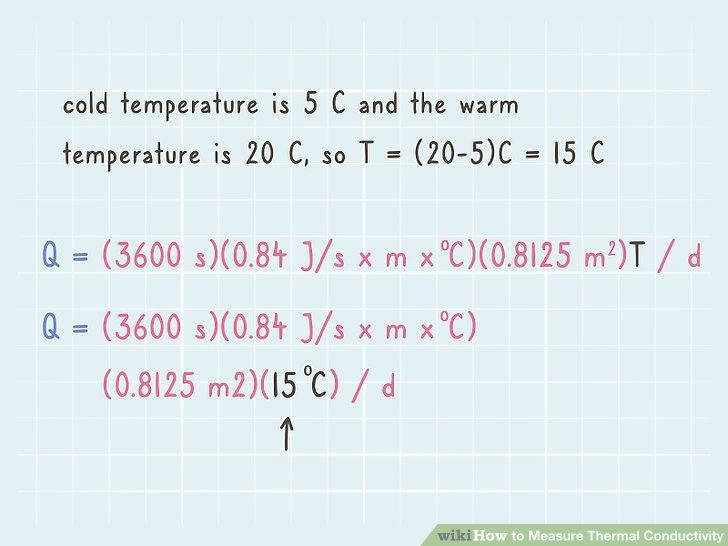
Subtract the cold from the hot temperature and use it for "T.
Insert the thickness of your sample for "d.
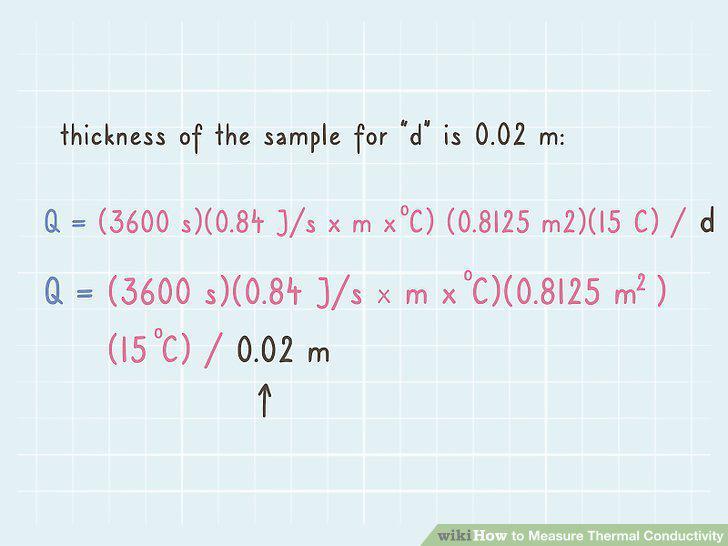
Insert the thickness of your sample for "d.
Calculate your equation to get joules of heat.
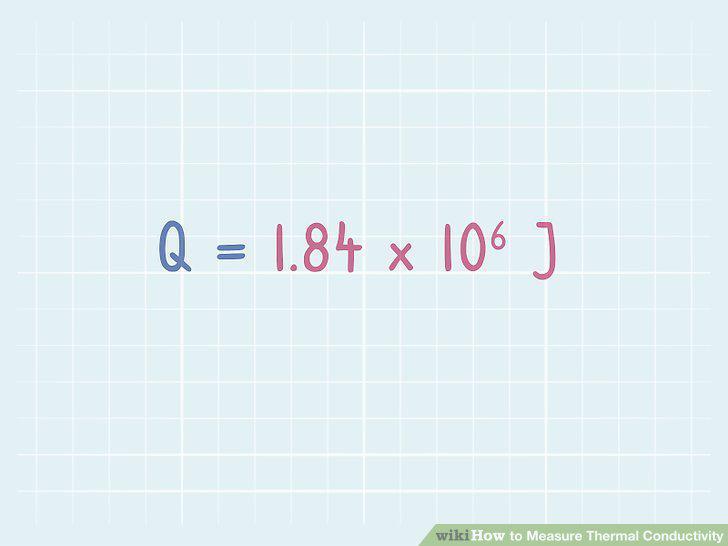
Calculate your equation to get joules of heat.
Comments (0)
No comments yet. Be the first to share your thoughts!